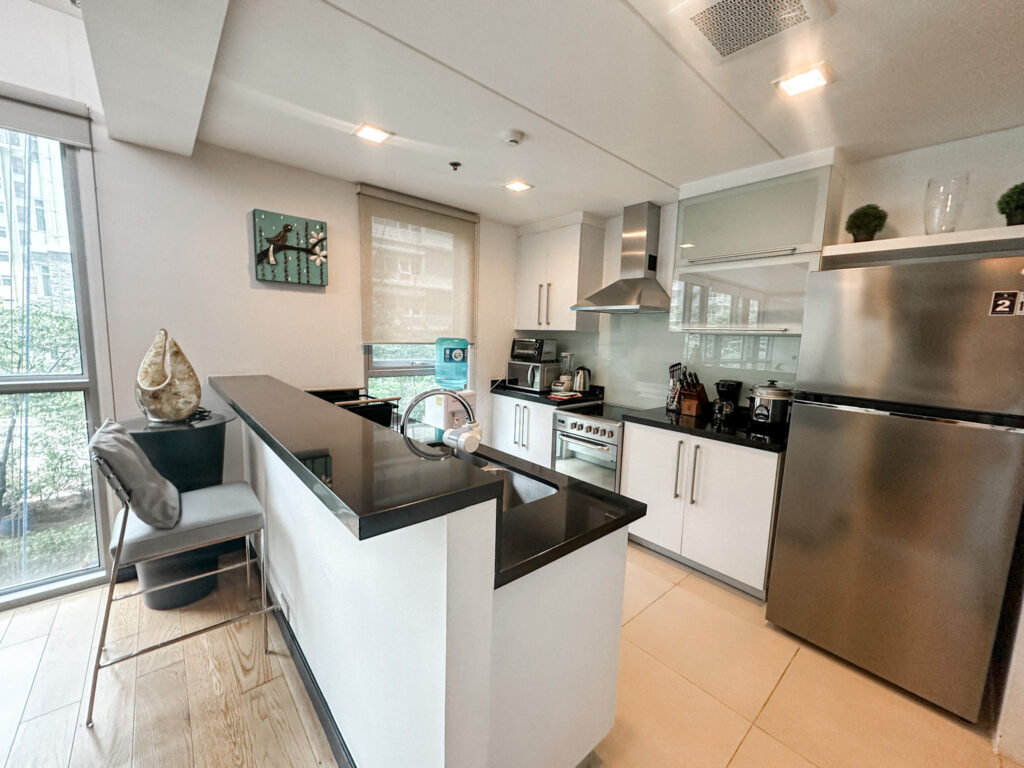
There’s a moment that happens about a few months into condo living when you realize that vertical living comes with a completely different rulebook than the one you grew up with. Maybe it’s the bass from 42B vibrating through your coffee mug. Maybe it’s the mysterious puddle by the elevator that’s been there for two days. Or maybe it’s the realization that your neighbor’s adobo schedule is now, inexplicably, your adobo schedule too.
I’ve been in real estate long enough to know that the glossy brochures never prepare you for this part. They’ll show you the infinity pool and the function room with mood lighting, but they won’t tell you about the intricate social choreography required to share 40 floors with strangers who become, through pure proximity, some of the most influential people in your daily life.
Let me be clear: I love condo living. The convenience, the amenities, the kind of location access that makes you feel like the city is your extended living room. And after years of walking clients through their first or fifth condo purchase, and hearing the stories that emerge six months, a year, two years later, I’ve learned that the difference between loving where you live and merely tolerating it often comes down to understanding the unwritten rules.
So let’s talk about what no one mentions in the show suite.
The Sound Barrier That Isn’t
Modern condo living has made us all amateur acoustics experts, whether we wanted the degree or not. You learn quickly that “good soundproofing” is a relative term, and that sound travels in ways that defy both logic and the laws of physics as you understood them.
I had a client, Sofia, who bought a beautiful two-bedroom in BGC. Corner unit, high floor, premium finish. She did everything right during the buying process. A few months after moving in, she called me. Exhausted. Her upstairs neighbor seemed to be training for a marathon at 5:30 AM. Every single day. The treadmill sessions were so punctual you could set your watch by them.
“Did you know,” she asked me, with the weary wisdom of the sleep-deprived, “that a person running in place can sound exactly like furniture being repeatedly dropped?”
I did know. Because noise complaints are almost never about the noise itself. They’re about the assumption of consideration, the unspoken agreement that we’ll all try to remember that our ceiling is someone else’s floor. When you live stacked on top of each other, sound becomes a form of intimacy none of us asked for.
If you work from home
Your Zoom calls are your livelihood now. I get it. But your neighbors didn’t sign up to be extras in your video conferences. If you’re taking calls at odd hours or your work involves projecting your voice, a quick heads-up goes a long way. Slip a note under your immediate neighbors’ doors. Something like: “Hi, I work from home and sometimes take calls early morning/late evening. If I’m ever too loud, please let me know. Here’s my number.” This one gesture preemptively diffuses most potential tension.
If you have a sound system you’re proud of
Bass frequencies don’t respect property lines. They travel through concrete like rumor through a group chat. Testing the limits of your subwoofer at 11 PM on a Tuesday is a choice, but maybe introduce yourself to your neighbors first. It’s harder to be angry at someone whose name you know and who brought you pandesal as a peace offering.
The remedy isn’t silence. That’s not realistic or fair. It’s awareness. The freedom to live fully in your space comes with the responsibility to remember that you’re not living in it alone.
The Great Aroma Divide
Let’s address something that makes people deeply uncomfortable: food smells are intensely personal, and in a condo setting, they become a shared experience whether anyone wants them to be or not.
I’m Filipino. I grew up with the smell of sinigang [sour broth] cutting through the air, with fish sauce as a weekly olfactory backdrop, with tuyo [dried salted fish] that announced breakfast three units away. I’m not about to suggest anyone should stop cooking the food that makes their home feel like home. But I’ve also fielded enough complaints from both sides of this divide to know it’s a genuine flashpoint, especially in buildings with diverse demographics.

The expat who moved from London doesn’t understand why the hallway smells like bagoong every so often. The family cooking traditional Sunday lunch doesn’t understand why their neighbor left a passive-aggressive note about “ventilation.” Nobody’s wrong, exactly, but nobody’s communicating either.
Your right to cook what you want in your own home is absolute. Your responsibility to manage how those smells affect shared spaces is also real. Use your exhaust fan. Actually use it, not just the recirculation setting. If you’re cooking something particularly pungent, crack a window. Keep your front door closed during peak cooking hours. These aren’t concessions, they’re just the small adjustments that make dense living workable.
READ: 7 Kitchen Must-Haves to Thrive in Condo Living
And if you’re the one bothered by your neighbor’s culinary choices, maybe examine whether your complaint is about the smell or about difference itself. Tuyo, blue cheese, kimchi, durian. Every culture has its aromatic staples that someone else finds challenging. A little tolerance goes both ways.
One of my favorite stories involves a building in Makati where a Filipino family and their Korean neighbors ended up bonding over shared meals after initial tension about cooking smells. They exchanged dishes. Now they have a standing monthly potluck. It started because someone chose curiosity over complaint.
The Common Courtesy of Common Areas
Common areas exist in this weird space between public and private. You pay for access to them, which creates a sense of ownership, but you don’t actually own them, which requires sharing. This paradox creates friction.
The gym
Wipe down your equipment. Nobody wants to encounter your DNA on the leg press. Re-rack your weights. If you’re doing circuit training during peak hours and camping on three different machines, you’re not being efficient, you’re being inconsiderate. And your phone call can wait until you’re done with your set.
The pool
I’ve seen buildings where the pool deck operates like a country club, complete with territorial lounge chair claiming and unspoken hierarchies about who swims when. The family with young kids feels judged by the childless couples doing laps. The lap swimmers are frustrated by the kids playing Marco Polo. Everyone’s paying the same association dues, everyone has equal right to be there, and yet the tension persists.

The solution is simpler than people think. Share the space in good faith. If you’re going to occupy a cabana for four hours, at least use it actively. If your kids are playing, make sure they’re aware of lap swimmers. If you’re swimming laps, accept that sometimes children exist in pools. Flexibility and awareness, in equal measure.
Parking
Your assigned slot is yours. Your neighbor’s assigned slot is theirs. The loading zone is not overflow parking. The visitor spot is not your second assigned slot. These sound like obvious statements, and yet parking violations generate more building complaints than almost anything else. If you need more parking, rent another slot. If you’re hosting visitors, tell them where guest parking actually is. If you’re receiving a delivery, don’t block the driveway.
READ: Hosting in a Condo: Tips for Stress-Free Holiday Gatherings
The Parcel Problem
The sheer volume of deliveries has become a major source of building friction. We’ve all become so accustomed to e-commerce convenience that we don’t think about what happens when 300 units are each receiving multiple deliveries per week, and there’s one guardhouse, one logbook, and limited holding space.
I’ve seen buildings where the concierge desk looks like a fulfillment center. I’ve heard from residents who’ve had packages go missing. I’ve watched disputes unfold over who’s responsible when something doesn’t arrive.
If you’re new to condo living
When you order something, track it. Pick it up within a reasonable timeframe, ideally within a day or two. Don’t treat your building’s guardhouse like a free storage unit. If you’re expecting something valuable or time-sensitive, be home to receive it or arrange for someone to claim it on your behalf. And tip your building staff during the holidays. They’re handling your packages, your food deliveries, your guests, your complaints, and doing it all with patience that deserves recognition.
Also, if you receive a package that isn’t yours, return it to the guardhouse immediately. Don’t open it “by mistake.” Don’t hold onto it thinking you’ll see your neighbor eventually. Just take it downstairs.
The Elevator Equation
The elevator is perhaps the purest distillation of condo etiquette because it forces strangers into temporary, unavoidable proximity. You can avoid the gym, skip the pool, ignore the function room. You cannot avoid the elevator.
Some observations from years of elevator small talk:
Let people exit before you enter. Basic physics and basic courtesy. Hold the door if you see someone approaching, but if they’re far enough away that holding it becomes an awkward hostage situation where you’re both uncomfortable, just let it go. They’ll catch the next one. Press your floor once. Mashing the button doesn’t make it go faster. If you’re with your children or your dog, maintain control of both. The elevator is not a playground or a dog park.
And perhaps most controversially: if you’re having a conversation, be aware that it’s no longer private the moment those doors open. I’ve heard breakups, business deals, family arguments, and medical diagnoses, all delivered at full volume between floors 2 and 28. The elevator makes everyone an unwilling audience.
The Littering Litmus Test
You can judge the overall civility of a building by its hallways and common areas between cleanings. In well-functioning buildings, you rarely see trash outside of designated bins. In buildings with culture problems, you see everything from cigarette butts to coffee cups to, inexplicably, used health products.
Littering in a condo building is a special kind of antisocial behavior because there’s literally nowhere for that trash to hide. The building is a closed system. Whatever you leave in the hallway, by the elevator, or on the pool deck, someone else has to clean up, or everyone has to look at it until someone does.
It signals something beyond just carelessness. It says: I don’t think of this as my space, I think of it as someone else’s problem. And once that attitude takes root, it spreads. Broken windows theory, but make it residential.
RELATED: Five Tips to Create a Stylish Minimalist Home
The fix is both individual and collective. Carry your trash to an actual bin. If your building doesn’t have enough bins in convenient locations, bring it up at the next association meeting. Cultivate a culture where people care about their shared environment. Compliment the cleaning staff. Notice when things look good. Model the behavior you want to see. These small acts accumulate into the atmosphere of a place.

The Practical Bottom Line
So here’s my real talk advice for thriving in condo living:
Introduce yourself
Not to everyone, necessarily, but to your immediate neighbors. Know their names. Exchange numbers. This simple act transforms future interactions from “annoying stranger who makes noise” to “Mark from next door, who’s usually pretty quiet but is having people over tonight.”
Communicate before complaining
If something’s bothering you, try a direct, friendly conversation first. Save building management for repeated issues or actual rule violations. Most problems can be resolved with a simple “Hey, I have early morning meetings, would you mind keeping it down after 10 PM?”
Be the neighbor you want to have
Pick up trash that isn’t yours. Hold the elevator. Smile in the hallway. Keep your music at reasonable volumes. Clean up after yourself in common areas. These aren’t extraordinary acts, they’re just basic good citizenship.
Assume good intent
Most people aren’t trying to be difficult. They’re just living their lives, sometimes obliviously, often just trying to get through the day. Lead with curiosity rather than judgment. That midnight noise might be someone working a night shift, not deliberately disrupting your sleep.
Know when to let it go
Not every minor annoyance requires action. Sometimes people will be inconsiderate. Sometimes children will be loud. Sometimes the elevator will smell like someone’s dinner. These are the costs of dense urban living, and part of thriving in a condo is developing the ability to shrug and move on.
Participate in your community
Go to association meetings. Vote on building matters. Join or at least acknowledge building activities. The more invested you are in the community, the better it tends to function, and the more satisfaction you derive from living there.
At RARE PH, we talk a lot about location and square footage and investment potential. But the truth is, the quality of your daily life in a condo comes down to something simpler: whether you can imagine yourself happy not just in your unit, but in your building. You’re not just buying square meters and a parking slot. You’re buying into a community.
Choose wisely. Live considerately. The unwritten rules aren’t really unwritten, they’re just rarely articulated until someone violates them.
Alyssa Barroso is the founder of RARE PH, specializing in Metro Manila & South high-end residential properties. When she’s not matching clients with their perfect homes, she’s probably in a condo elevator somewhere, making small talk about the weather.