
A condo can sit on the market for months even when there is nothing fundamentally wrong with the property.
The asking price may have started too high. Another unit in the same building may be offering better value. The listing may not be doing the space justice. Or buyers may be interested but keep running into practical problems when they try to arrange a viewing.
Sometimes the reason is obvious. Sometimes it takes a closer look at the listing, the competition and the feedback from buyers who have already seen the property.
If your condo has been on the market longer than expected, these are nine things worth looking at.
#1 – Price Mismatch with the Current Market
This is usually the first thing to examine.
Your purchase price, the amount you spent renovating the unit, or what a similar property sold for several years ago doesn’t necessarily tell you what buyers will pay today.
Buyers are comparing your property with the alternatives available right now.

That may include other units in the same building, newer developments nearby, units with better views or parking, or properties offering more attractive payment terms.
A price that made sense six months ago may not be as competitive today.
The important question isn’t simply, “Is this a fair price?”
It’s:
“Is this the price at which today’s buyer is willing to choose this property over the alternatives?”
#2 – Buyers Have More Options
Sometimes the issue isn’t your condo alone. There may simply be a lot of similar properties competing for the same buyers.
A buyer looking at a ₱25 million condo may be comparing several units in the same building, newer developments nearby, or even houses in another location. If there are plenty of comparable properties available, buyers have more room to take their time, negotiate, and wait for the one that gives them the best combination of price and features.
This is why it helps to look at the current inventory, not just what similar properties sold for in the past. How many comparable units are currently for sale? How long have they been listed? Are new developments offering incentives or more attractive payment terms?
Then look at what buyers are getting for their money. Compare your condo with the properties currently competing for the same buyer:
- size and layout
- floor level
- view and orientation
- parking allocation
- furnishings and condition
- pet policy
- building age
- amenities
- monthly dues
- location and accessibility
- asking price and payment terms
Those comparisons matter because buyers are making them whether sellers are paying attention to them or not.
Your condo doesn’t necessarily have to be the cheapest option. But when buyers have plenty of alternatives, the property needs to make sense within that particular group of listings.
#3 – The Listing Doesn’t Show the Property at Its Best
Buyers usually see your property online before they ever see it in person.
That makes the listing presentation important.
Dark photographs, cluttered rooms, poor composition, outdated information, or a lack of useful details can make an otherwise good property easy to overlook.
This is particularly important for condos because buyers are often comparing several units within the same building.
If one listing immediately communicates the quality of the space while another requires the buyer to imagine what it could look like, the better-presented property has an advantage.
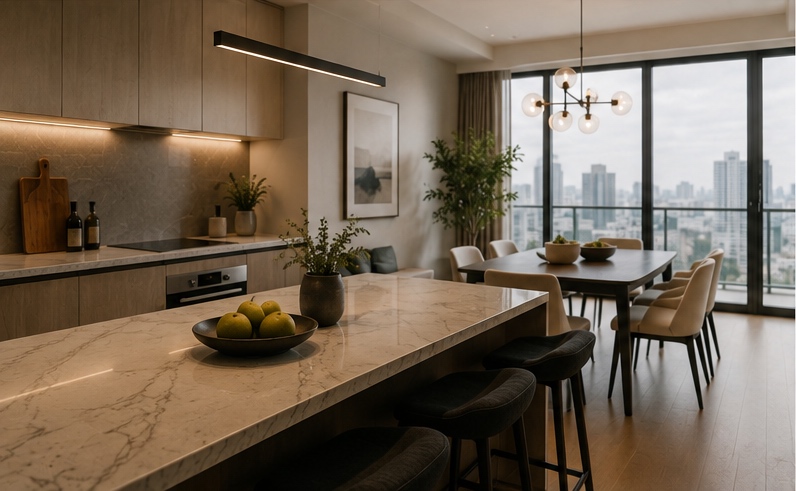
Good presentation doesn’t mean making the condo look completely different from reality. It means showing the space clearly, using good light, choosing useful angles, and giving buyers enough information to decide whether they want to see it in person.
READ: What You Need to Know About Staging Your Home
#4 – The Property Is Difficult to View
A buyer can be genuinely interested in a property and still move on if arranging a viewing becomes unnecessarily difficult.
This happens more often than sellers realize. Perhaps the owner is only available on certain days, the tenant needs several days’ notice, or building access requires additional coordination. Sometimes the unit is occupied and needs to be prepared before every viewing, which makes spontaneous visits nearly impossible.
None of these things is necessarily a deal-breaker on its own. But when a buyer is also looking at several other condos, friction can be enough to make them choose the easier option.
READ: Getting Ready for Showings: Simple Habits That Make Buyers Stay Longer
A buyer who can view another property tomorrow may not wait a week to see yours.
If you’re serious about selling, make the property reasonably accessible to qualified buyers. You don’t have to accommodate every viewing request, but the process should be straightforward enough that genuine interest has a chance to turn into an actual visit.
#5 – The Condo Is Occupied and Doesn’t Show Well
An occupied property isn’t necessarily a problem. In fact, a well-maintained and thoughtfully furnished unit can show beautifully.
The challenge comes when the buyer can’t easily see the space or envision themselves in it.
Personal belongings, excess furniture, poor lighting, or a unit that hasn’t been prepared for viewing can make rooms feel smaller and less appealing.

Buyers also notice maintenance issues that sellers may have stopped seeing because they have lived with them for years.
A loose cabinet handle, stained grout, peeling paint, a noisy air-conditioning unit or a damaged fixture may seem minor individually. Put several of them together, and buyers start wondering what else needs attention.
READ: 40 Things That Need to Go Before Selling Your Home
#6 – The Terms of the Sale Are Too Restrictive
Price isn’t the only part of the deal.
Buyers may also consider:
- how much earnest money is required
- payment schedules
- whether bank financing is accepted
- turnover timing
- inclusion of furniture or appliances
- existing tenancy
- parking arrangements
- flexibility around the closing date
A property can lose a buyer even when the asking price is reasonable if the overall terms are significantly less attractive than competing properties.
This doesn’t mean sellers should agree to every request.
It means you should understand what you’re offering as a complete transaction, not just as a price per square meter.
#7 – Buyers Keep Discovering Something They Didn’t Expect
Sometimes the listing generates interest, but the inquiries stop once buyers learn more about the property.
It could be unusually high monthly association dues, restrictions on leasing, a complicated title situation, an issue with parking, an outstanding obligation, or another detail that affects the buyer’s decision.
That doesn’t automatically make the property difficult to sell.
What creates problems is when important information comes out late in the process. A buyer who feels that they are discovering new complications one at a time may simply lose confidence and move on.
The better approach is to know the property’s details before it is marketed and make sure the broker has accurate information from the beginning.
A serious buyer is much easier to work with when there are no unpleasant surprises halfway through the transaction.
READ: Things Sellers Must Do to Sell a Property
#8 – The Property Has Been on the Market Too Long Without a Strategy Change
A property that has been listed for months isn’t automatically a bad property.
But if the same price, photos, description, and marketing approach have produced little response for an extended period, continuing to do exactly the same thing may not change the result.
Buyer behavior can give you useful clues.
If the listing is getting plenty of views but very few inquiries, the price or presentation may need another look.
If there are many inquiries but few actual viewings, something may be causing buyers to lose interest before they visit.
If people are viewing the property but nobody is making an offer, listen carefully to what they are saying. Several buyers raising the same concern is worth paying attention to.
The answer isn’t always to reduce the price immediately. Sometimes the listing needs better presentation, clearer positioning, more flexible viewing arrangements, or a different approach to the buyer you’re trying to reach.
#9 – You’re Marketing to the Wrong Buyer
Not every condo appeals to the same person.
A compact unit near a business district may appeal to a young professional or investor. A larger unit with multiple bedrooms may be more appropriate for a family. A high-floor residence with an open view may attract someone willing to pay a premium for those particular features.
The listing should make those advantages clear.
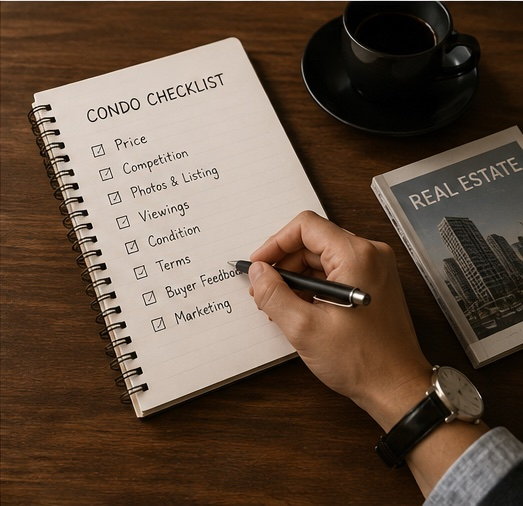
Think about who is most likely to appreciate the property and what matters to them. An investor may care about rental demand and building policies. An end-user may care more about the layout, natural light, storage, parking and convenience.
The more clearly you understand the likely buyer, the easier it becomes to decide how the property should be presented and where it should be marketed.
MORE: Reading the Signs: When a Client Might Not Be Ready Yet
What If None of These Seems to Be the Problem?
Sometimes, the answer is simply that the market needs more time.
Real estate doesn’t move at the same speed for every property. A unique unit, a high-value property, or a condo in a market with limited buyer demand can naturally take longer to sell.
The important thing is to distinguish between a property that needs time and a property that needs a change in strategy.
That’s where actual market feedback becomes useful.
Look at the number and quality of inquiries. Pay attention to what buyers say after viewings. Compare your property with competing listings, not just with what you originally paid for it.
And most importantly, be willing to adjust when the evidence points in a different direction.
What Sellers Can Actually Control
There are plenty of things about a condo that cannot be changed.
You can’t change the building’s location. You can’t move the unit to another floor. You can’t make a ten-year-old building brand new.
But you can control how the property is positioned in the market.
You can reconsider the price.
You can improve the presentation.
You can make viewings easier.
You can clarify the terms.
You can address concerns that repeatedly come up during buyer feedback.
And you can make sure the property is being shown to the people most likely to appreciate it.
Selling isn’t always about finding someone who will pay whatever you think the property is worth.
It’s about finding the right buyer and giving them a compelling reason to choose your property over the alternatives.
If your condo has been on the market longer than expected, RARE Properties can help you take a fresh look at the listing, the competition and the buyer feedback to determine where the property may be losing potential buyers—and what is actually worth changing.
UP NEXT: Step-by-Step Guide to Selling a Condo in the Philippines